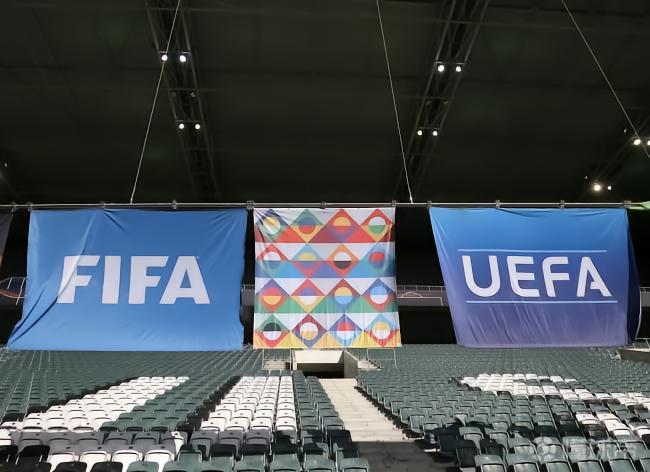
According to official sources, during the draw for the 2026/27 UEFA Club Championship in Monaco, representatives from the European National Association, members of the UEFA Executive Committee, European members of the FIFA Council, and the president of the European National Association discussed the ongoing crisis facing FIFA.
The meeting reviewed the consequences of the FIFA president's failed attempt to sell part of the World Cup's interests to external investors. Participants concluded that the plan exposed serious misjudgments, an abuse of presidential power, and a leadership philosophy incompatible with the responsibilities of the highest position in world football.
The participants unanimously authorized the UEFA president and management to take all necessary institutional, political and legal measures to promote fundamental reforms, restore appropriate limitations on the president's powers, and ensure that FIFA once again functions as an institution, rather than revolving around any one individual.
UEFA stated that the first step must be a truly independent external review of the "FIFA Progressive Enterprise" project, comprehensively examining relevant documents, communication records, and decision-making records. FIFA cannot conduct its own investigation and then demand that the football community accept its findings.
UEFA believes the impact of this crisis extends beyond governance. The trust required to serve as FIFA president has been broken and cannot be restored by withdrawing a proposal, making assurances, or committing to reforms afterward. World football needs a new leadership capable of rebuilding trust.
UEFA will continue to work with its confederations, member associations, and the wider football community—including fans, players, clubs, and leagues—to shape the future of FIFA. If the current FIFA president seeks re-election, UEFA will work with its partner confederations to ensure member associations have access to a credible alternative committed to integrity, accountability, development, and genuine institutional change.
UEFA stated that FIFA currently holds billions of dollars in reserves, which belong to its member associations. UEFA will work with other federations to explore responsible ways to release some of these reserves to benefit member associations while maintaining FIFA's financial stability.
The delegates also learned that FIFA has confirmed in writing that the FIFA Forward Enterprises program has been "irrevocably and permanently withdrawn" and will not reappear in any other form, structure, name or manner.
After receiving two assurances from FIFA on July 30 and consulting with national associations, UEFA agreed to temporarily suspend the withdrawal of European teams from FIFA competitions next season, affecting the Women's U20 World Cup, U17 World Cup and Women's U17 World Cup.
UEFA emphasized that while the participation issue has been temporarily resolved, the fundamental crisis is not over. Abandoning the FIFA Progressive Enterprise program cannot erase the deception, intimidation, and abuse of power that led to the program, nor can it restore the lost trust.
UEFA reiterated that this is not a choice between good governance and football development, nor is it about Europe seeking greater power within FIFA, but rather about ensuring that no part of world football depends on the power of any one person.
FIFA has a responsibility to support every member association; development is an institutional obligation, not a favor bestowed by the president. Neither the World Cup nor the U15 tournaments are FIFA events for sale; FIFA's development resources cannot be used as a tool for personal or political influence and must be protected by transparent and objective rules.
FIFA must once again be governed as an institution that serves football, rather than as a tool of personal power.